
What is Legal Design Thinking?
At its core the aim of legal design thinking is to make the law and legal systems more accessible to all. In order to create a just world and equal opportunities. Everything related to the legal system and the law is already designed, though with legal design thinking we aim to make it more human friendly as well as make it function better for what it is supposed to do: let society function and let people flourish with all complexities that are going on in the world.

The mindset, process and methodologies
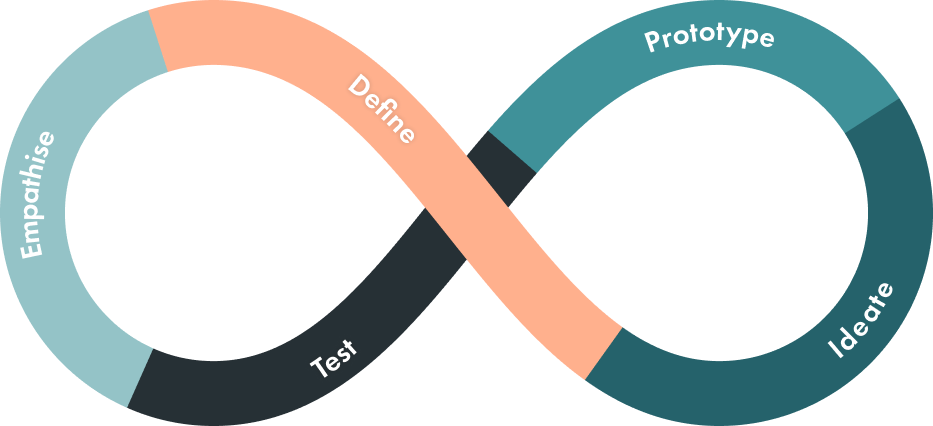
At the core of legal design thinking is the mindset in how you approach legal services, documents, solutions and processes. Different methodologies are relevant for different contexts, just as the broadness of the scope of design itself. Legal Tech in the commercial setting might require different approaches and methods than when you’re in the public legal system offering legal services that serve a broad spectrum of citizens. Though at the core are design methodologies and processes that come from different design disciplines. Just as there are many legal fields, design is not just ‘making things pretty’. Having an understanding of the scope of design disciplines is important to become adequate and effective when applying legal design.
FAQ
Is a visual contract legally binding?
Yes, because of contract freedom a visual contract is legally binding. Also, you can even use spoken words as a contract. Nevertheless, having tangible proof of your agreements make for a better reference and evidence in the case that something goes wrong. Or if you just want to emphasize the agreements you make when working together. Depending on the context the style and amount of visualisation in a visual contract can differ, just as the level and amount of plain language or traditional legalese you use. We co-create our visual contracts always with legal experts that stand behind the drafted and designed content, so we can assure you to have a contract that generates results and good collaboration, as well being legally binding.
Does a visual contract hold up in court?
In short: yes. We have conducted our own mock trial with one of our visual contracts in April 2024. Clarity provides stronger cases in court. Visualisation can help with clarity. Most importantly is that the visuals are created with attention, just as much as you draft contracts with attention and purpose. Download our impact report on Tzorg’s visual contracts including the mock trial or read more here and here.
Who are visual contracts for?
While many argue that visual contracts are only for consumer facing contracts, we have plenty of experience with both consumer, employee ánd commercial contracts. Even lawyers, judges and higher educated people benefit from clear contracts. Check out our showcases for examples.
Do I need to be a designer or artist to create a visual contract?
No you don’t. If you like you can train yourself on the ins and outs of contract design through our articles and trainings, or using our contract design library to get to a higher level quickly. Get started here or book a call with us.
How can I get started with contract design and/or legal design with limited resources?
You can keep learning through our articles and start directly with our free contract design brief and 7 day course here.
How can I learn more about contract design?
We offer training and materials to help you gain more understanding of contract design. Start here.
Which patterns are best to use for different situations?
Best practices in UX and information design show which patterns work best for different situations. It is all related to how our brains work, combined with the context that the contracts are used in and the people (audience/users) who are reading and using the contract.
What is the ROI of a visual contract or contract design?
You can calculate the ROI of a visual contract by checking your current readability score, the level of difficulty of text you are using, the legal strategy and validity of the content and the brand experience of the contract. It is a mix of different factors, though a rule of thumb for ROI is that you can gain at least a 5-20% improvement by applying contract design principles.
What is Legal design thinking?
Legal Design Thinking is the practice of making legal systems, services and documents more understandable and accessible to people by the use of multiple design disciplines like design thinking, User Experience Design and information design, as well as plain legal language and proactive law. Read more about Legal Design Thinking here.
Achieve your business goals now
Align better with your customers, employees or suppliers by designing accessible contracts
